Clouds vs Hits vs Flavour: Finding Out Which Kind of Vaper You Actually Are
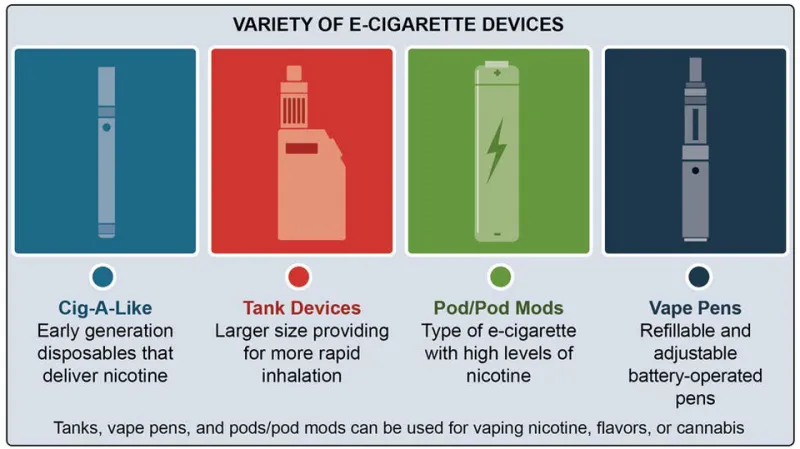
Photo: United States Environmental Protection Agency, Public domain, via Wikimedia Commons
Most people wander into vaping through necessity — they want to quit smoking, they want a cheaper habit, or someone they know recommended it. They pick up a starter kit, muddle through the settings, and eventually land on something that feels vaguely right. Job done, more or less.
But here's what rarely gets discussed: the reason so many UK vapers end up dissatisfied with their setup — or spend a small fortune cycling through devices — is that they never properly figured out what they actually want from vaping in the first place.
This isn't about specs. It's about knowing yourself.
The Four Vaping Personalities (And Where You Probably Sit)
Broadly speaking, most vapers fall into one of four camps. You might straddle two of them, but one usually dominates.
The Cloud Chaser. This person is after volume. They want thick, impressive vapour production — the kind that fills a room, catches the light, and turns heads. If you've ever found yourself genuinely interested in coil builds, sub-ohm tanks, or the airflow diagrams on a mod box, you're probably here.
The Nicotine Hunter. This vaper came from cigarettes and still thinks primarily in terms of satisfaction. They want that hit — the back-of-the-throat sensation that signals the nicotine has landed. Cloud size is largely irrelevant. What matters is whether they feel sorted after a few puffs.
The Flavour Obsessive. These are the people who spend twenty minutes in a vape shop sampling e-liquids and genuinely agonise over whether a tropical blend has enough mango on the exhale. Vapour production is secondary. The taste experience is everything.
The Discreet User. This vaper wants to get their nicotine fix without anyone particularly noticing. They vape in situations where discretion matters — offices, flats, social settings where pulling out a massive device would be awkward. Small clouds, minimal noise, maximum subtlety.
None of these is better or worse than the others. They're just different, and they require very different setups.
Why Getting This Wrong Costs You Money
Here's a practical example. A nicotine hunter who buys a high-wattage sub-ohm kit because a reviewer made it look impressive is going to have a frustrating time. Sub-ohm devices are designed for lower nicotine concentrations — they produce too much vapour for high-strength nicotine salts, and the throat hit is often too harsh to be enjoyable. They've spent £50 on the wrong thing entirely.
Flip it around: a cloud chaser who picks up a pod device because it's compact is going to feel permanently undersatisfied. The airflow is too restricted, the coil resistance too high, and the vapour output nowhere near what they're after.
This mismatch between personality and product is behind a significant chunk of the abandoned gear sitting in drawers across the UK.
Matching Your Style to Your Setup
If you're a Cloud Chaser: You want a sub-ohm tank or a rebuildable atomiser, a mod capable of at least 60W, and wide-open airflow. Coil resistance should be below 0.5 ohm. Go for 70/30 VG/PG e-liquid or higher VG ratios — the thicker base produces denser clouds. Nicotine strength should stay low, typically 3mg or 6mg freebase.
If you're a Nicotine Hunter: A pod system or a mouth-to-lung (MTL) tank is your territory. You want restricted airflow that mimics the draw of a cigarette. Higher resistance coils, 1.0 ohm and above. Nicotine salts work brilliantly here — they deliver a smoother, faster-acting hit at higher concentrations without the harshness you'd get from freebase nicotine at the same strength.
If you're a Flavour Obsessive: MTL setups often produce the most intense flavour because the vapour is more concentrated as it passes over the coil. Lower wattage, higher resistance coils, and a good 50/50 PG/VG e-liquid tend to deliver the clearest taste profile. Some flavour chasers also prefer single-coil configurations — less heat, more nuance.
If you're a Discreet User: A compact pod device or a vape pen is your best friend. Low vapour output, simple operation, and something that fits in a jacket pocket without announcing itself. Nicotine salts make sense here because you can get proper satisfaction from a short, unobtrusive puff rather than needing a prolonged session.
The Psychology Behind Your Preferences
Your vaping style often reflects something deeper about your relationship with nicotine and the ritual itself.
Nicotine hunters are frequently ex-smokers who've transferred the physical and psychological habits of smoking directly into vaping. The draw, the throat hit, the routine — these things matter as much as the nicotine itself. For this group, a device that doesn't replicate those sensations will always feel like a compromise.
Cloud chasers, interestingly, are often people who've moved well past the quitting-smoking phase and found a new hobby in the mechanics and performance of vaping itself. It becomes something to tinker with, optimise, and show off. There's a genuine enthusiast culture here that has more in common with hobbyist communities than with smoking cessation.
Flavour obsessives tend to be driven by sensory curiosity. They're often the same people who care about coffee origins or spend time on food pairing. Vaping becomes a tasting experience rather than a nicotine delivery mechanism.
Discreet users are pragmatists. They want the function with minimum fuss and minimum social friction. Simplicity wins every time.
A Quick Self-Assessment
If you're not sure which camp you're in, ask yourself these questions:
- When you finish a vape session, what made it satisfying — the cloud, the hit, the taste, or simply that it was quick and easy?
- What bothers you most about your current setup — not enough vapour, not enough kick, flavour that's a bit flat, or the device being too bulky?
- What drew you to vaping in the first place — quitting smoking, curiosity, or something else?
Your honest answers to those questions will tell you more about your ideal setup than any spec sheet.
The Takeaway
Knowing yourself as a vaper isn't indulgent navel-gazing — it's genuinely useful. It stops you buying devices that look impressive on paper but feel wrong in practice. It stops you chasing trends that don't suit your actual needs. And it saves you real money in a market where it's very easy to spend a lot of it on things that end up at the back of a drawer.
Figure out what you actually want. Everything else follows from there.